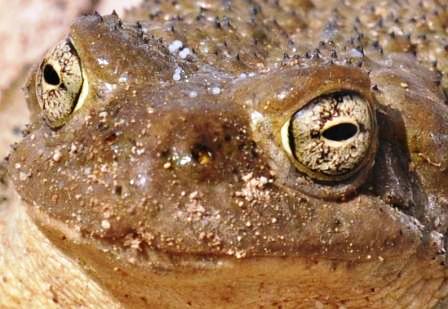
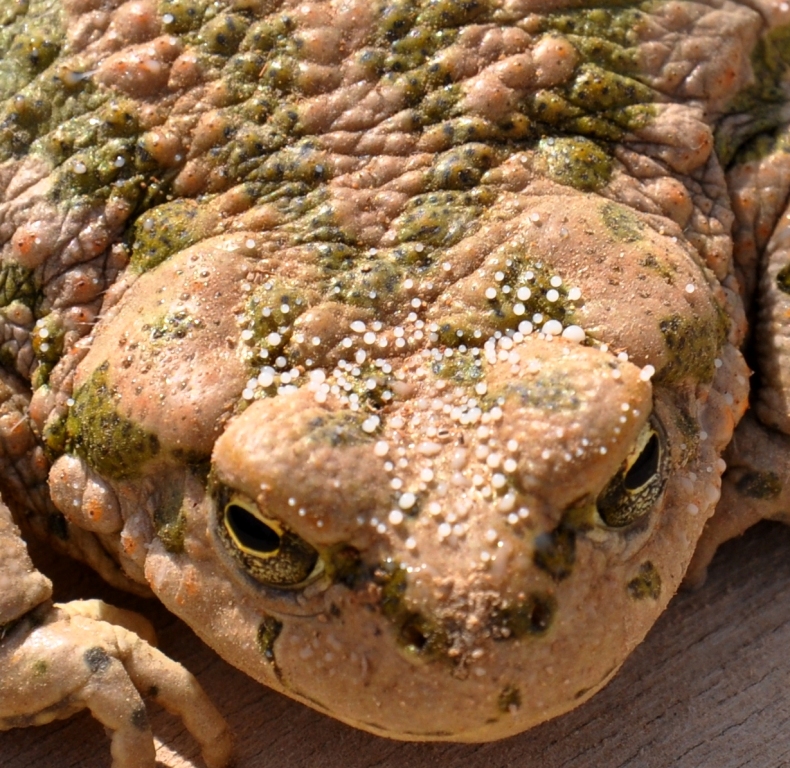
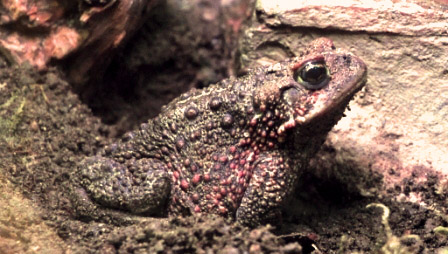
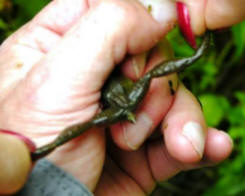
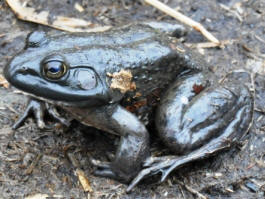
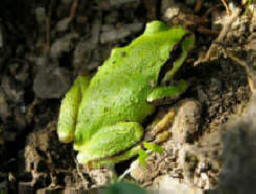
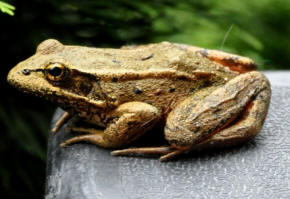
When the Toad came home There was panic in the parlours and howling in the halls, There was crying in the cow-sheds and shrieking in the stalls, When the Toad came home! from Kenneth Grahame’s “Wind in the Willows”
With due respect to Mr. Grahame’s famous character, the poor toad is not high on the list of cuddly creatures. Lacking beauty, grace, speed, and just about every other admirable quality toads have been relegated to the realms of witches and hallucinogen seeking crazies in our popular culture.
Why the bad rap to begin with? Setting aside for the moment the less than lovely physiognomy of the amphibian, its physiology and behavior are the roots of the problem The noxious properties of toad excretions were well known to ancient people. And unlike frogs that seemed to know their place in the swamps, those rascally toads would periodically burst from stagnant waters and invade the realm of man, sometimes in unsettling numbers. By the Middle Ages toads were strongly associated with witches as familiars, ingredients for spells, and mystical symbols. Put this all together on an ungainly beast that with warts sprouting all over the place and you have a pretty good recipe for unpopularity.
Question: When is a hairless, coldblooded, slippery, bug eyed beast considered cute?
Answer: When it’s a frog.
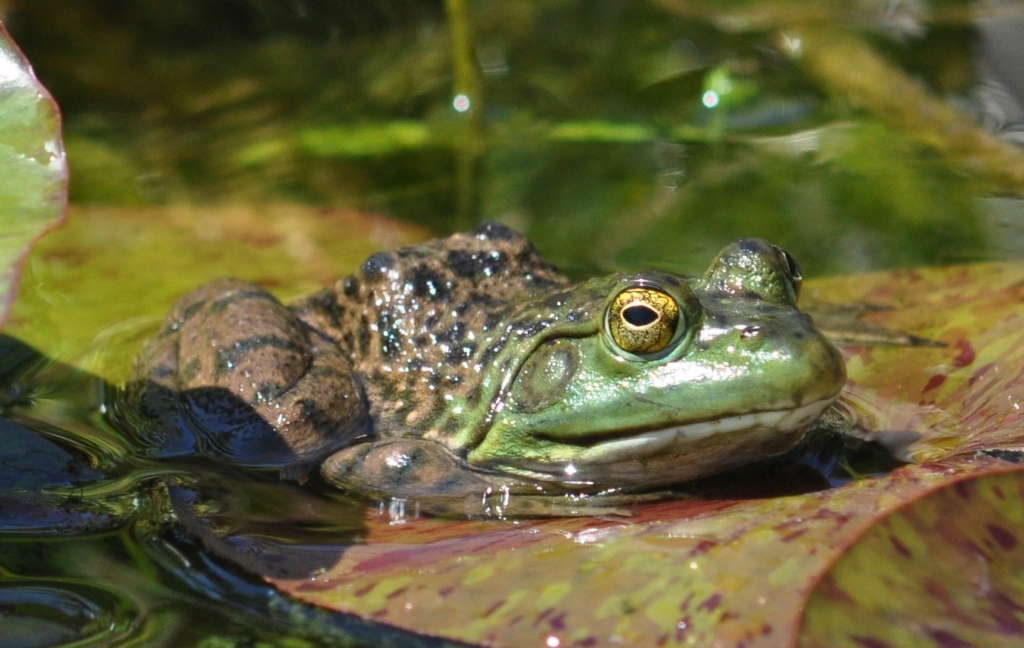
There are few non-mammalian representatives of the animal world more appealing than frogs. Salamanders and the little known caecilians don’t rate Muppet style fame. Despite all their similarity toads don’t even come close to that level of status. Frogs, however, approach national icon status (the Gieco gecko notwithstanding.) But misplaced popularity or not, the order of amphibians called Anurans surely deserve the interest. They are fascinating creatures with complex lives and a wonderful array of color.
The Anurans comprise both what are commonly referred to as frogs and toads. More than 7,000 species (according to the American Museum of Natural History) of them are found on every continent outside of Antarctica. Everyone, of course, knows the difference between frogs and toads. Toads are those warty things that spend life on land with only occasional forays into water to breed. Frogs are, for the most part, smooth skinned water lovers. But from water level to tree top a huge variety of froggy lifestyles exist. There are a few who don’t require much more than adequate moisture to get by, some that spend nearly an entire existence submerged, and a some who prefer the half and half leisure of the shoreline.
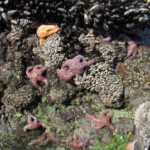
How can a creature that moves just slightly faster than a snail, lacks a brain or blood, is unable to control its body temperature, finds food only because it happens to accidentally slide over the top of it, and spends most of its life clinging to rocks teach us anything about the beauty and complexity of life? Well stay tuned. The animal in question is one of the true stars of our Northwest wildlife. In fact, our shore line harbors more of these fascinating creatures than any other shoreline on earth.
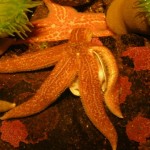
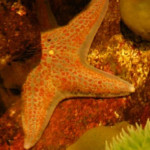
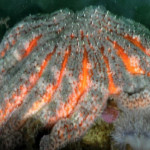
About 2,000 species of sea stars inhabit our planet. At slightly less than three quarters of an inch, Leptychaster propinquus is the smallest. The largest reported sea star is the yard long Giant Star, Evasterias echinosoma, found in deep waters of the far north Pacific. The racehorse of the echinoderms is are very own Sun Star, Pycnopodia helinathoides. Barreling along at three tenths of a mile per hour they actually are quite speedy in the sea star realm. Should you ever have the pleasure of watching one of these big stars slide along the ocean floor it really does seem to move quickly.
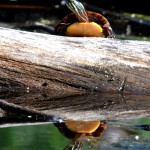
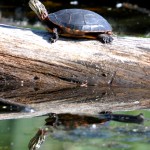
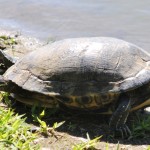
Just could not resist these chelonians. Note the beautifully colorful shell of the Painted Turtle reflected so nicely in the water compared to the yellow underside of the Red Eared Slider on the right. Hard to make out but the red ear of the slider gives this turtle its name. Sliders get surprisingly large.
First of all my apologies to those of you getting notified unnecessarily by spam comments. I’ve worked pretty hard to make this an informative and entertaining website. Unfortunately we have a bunch of knucklehead self promoters out there.
And as for those of you who want to bombard me with your crap – you have pissed me off. Quit now. I have no problem with you attaching your link to your comments, but if the comment has nothing to do with wildlife it will be marked as spam and dumped in the digital trash heap where it belongs.
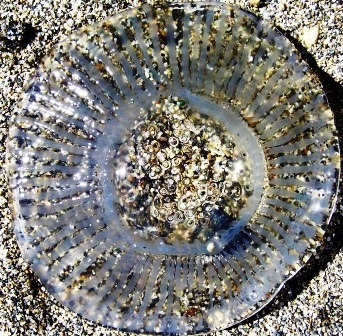
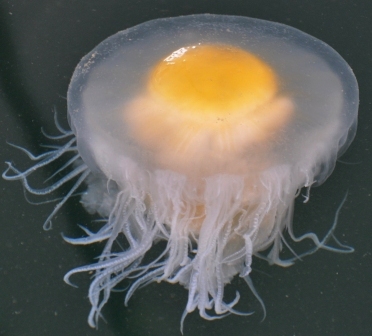
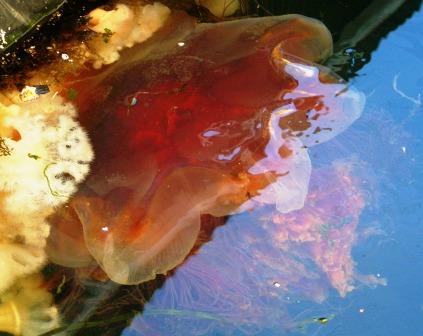
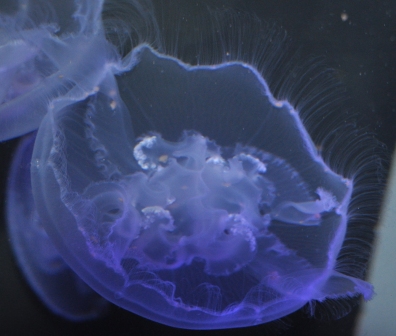
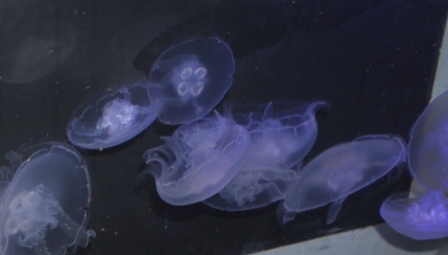
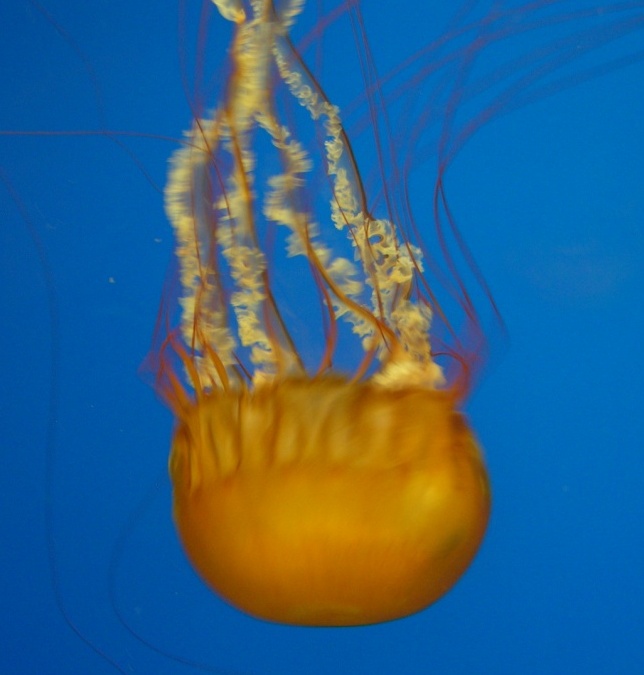
In light of recent findings about Moon Jellies I thought I’d do something a little more in depth (pardon the pun) about these unique animals. Our Northwest shores are blessed with an abundance of invertebrate life. Sea Stars (starfish) are our most famous and favored non-backboned representative, but when it comes to lacking backbone nothing does it better than a jellyfish. Jellyfish are classified under the phylum Cnidaria, (pronounce the word without the C) a huge group of 10,000 or so animals that also contain the hydras (class Hydroza), sea anemones, and corals (class Anthoza). For the most part Cnidarians are marked by two distinct characteristics: radial symmetry and a relatively large internal space for digestion. Generally speaking, if you cut a cnidarian in half you get a pair of mirror images with a large space in the middle for digestion of food, tentacles on either side, and a mouth in the middle. True jellyfish are in the class Scyphoza, but many Hydroza are so similar to jellies they are commonly referred to as jellyfish.
Generally speaking jellyfish are distinguished by a mobile lifestyle and more fully developed tentacles. The other guys in this phylum prefer a settled existence anchored to the marine substratum. With the exception of certain hydras all are lovers of the marine environment.
Like sea stars we have plenty of jellyfish and most have varying common names so sources vary. To avoid confusion the following list only includes those animals most people would instantly recognize as a jellyfish. Sizes refer to the measurement of the animal across its medusa, the bowl shape body common to most jellies.
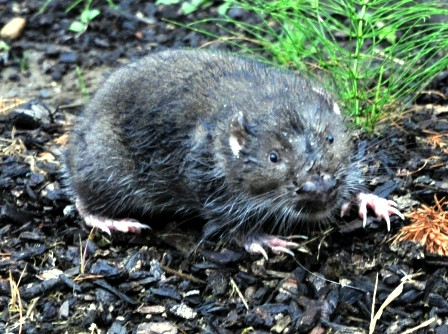
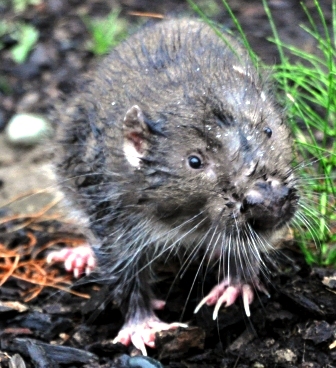
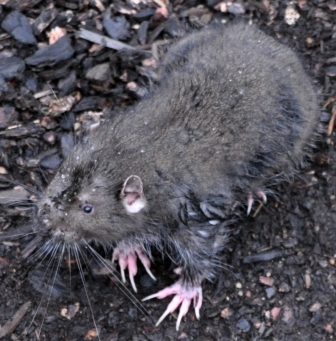
No, it’s not a joke, but it’s not a beaver either. The fascinating creature in question is called a Mountain Beaver and although it is a rodent, the similarities with a real beaver pretty much end there. The Mountain Beaver, Aplodontia rufa, is a muskrat sized rodent of ancient lineage. Relatively common yet mysterious beasts, they are rarely encountered due to their subterranean existence and nocturnal dining habits. Most people are not even aware that the strange animal even exists. And thanks to a physiology that harks back to the early days of mammalian evolution they are almost exclusively residents of the damp Pacific Northwest.
Also called a boomer or giant mole, the animal is a stout 12 – 14 inches long, and possesses a short, stubby tail. The tail, not much more than an inch long and tucked against the body, is pretty much invisible except on close inspection. Most are brownish in color, but that varies to black with silvery tips. A pair of tiny black eyes rest above a large blunt snout and below a pair of quarter sized, mouse like ears. Perhaps its most distinctive feature, however, are the long clawed feet in front and back. If you have ever seen one of these guys those claws are probably the main thing that sticks in mind.
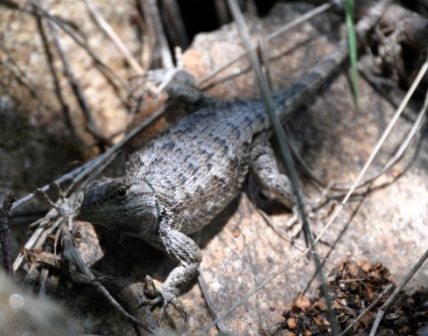
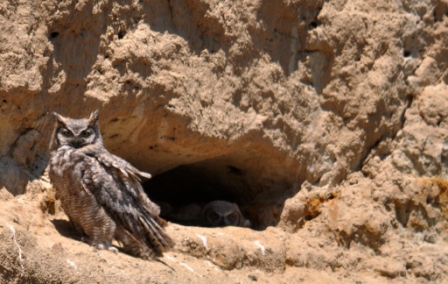
Lizards, of course, are something you expect to see. In this case a sagebrush lizard found, along with many of its cousins, hiding amidst the rocks in a beautiful place called Hulls Gulch outside of Boise. It’s a beautiful hiking area with wide vistas of great views. But it also revealed a pleasant surprise in the Great Horned Owl nesting in the side of a sand cliff. We tend to think of these impressive birds as building reclusive homes hidden far above in the recesses of giant trees. In Idaho, however, at least one of them prefers a cool refuge in a sandy cliff. I believe the little one on the right is a young chick. Owls are always a wonderful and unexpected sight.
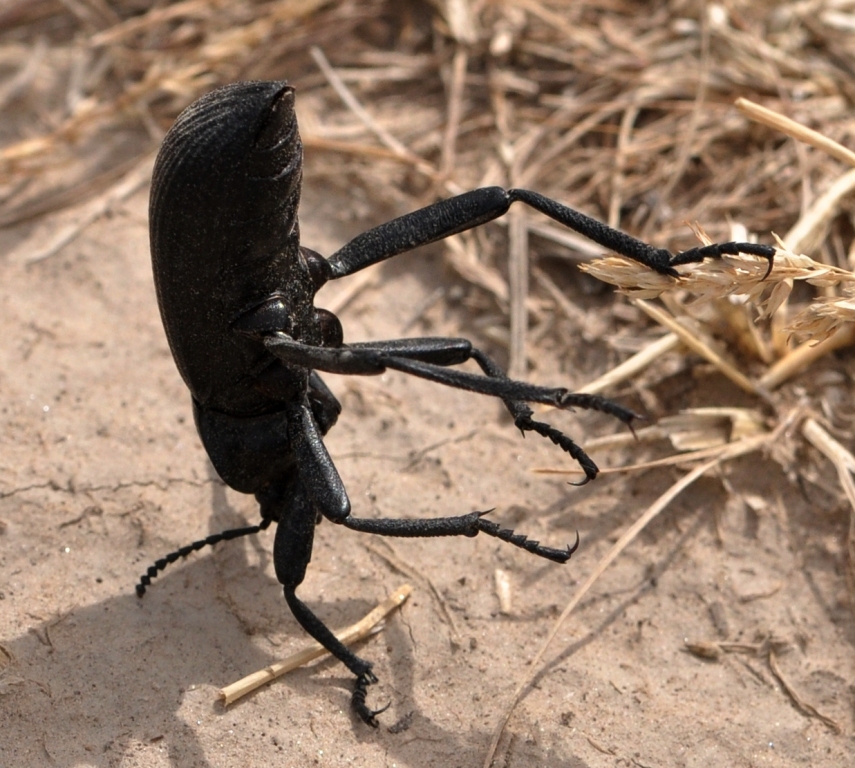
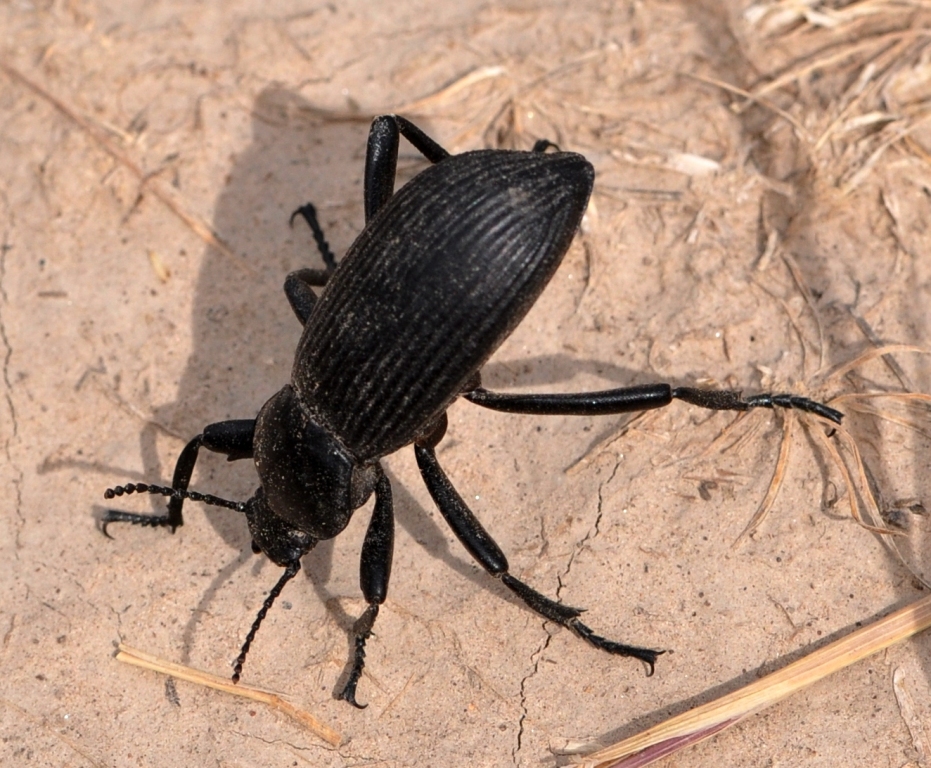
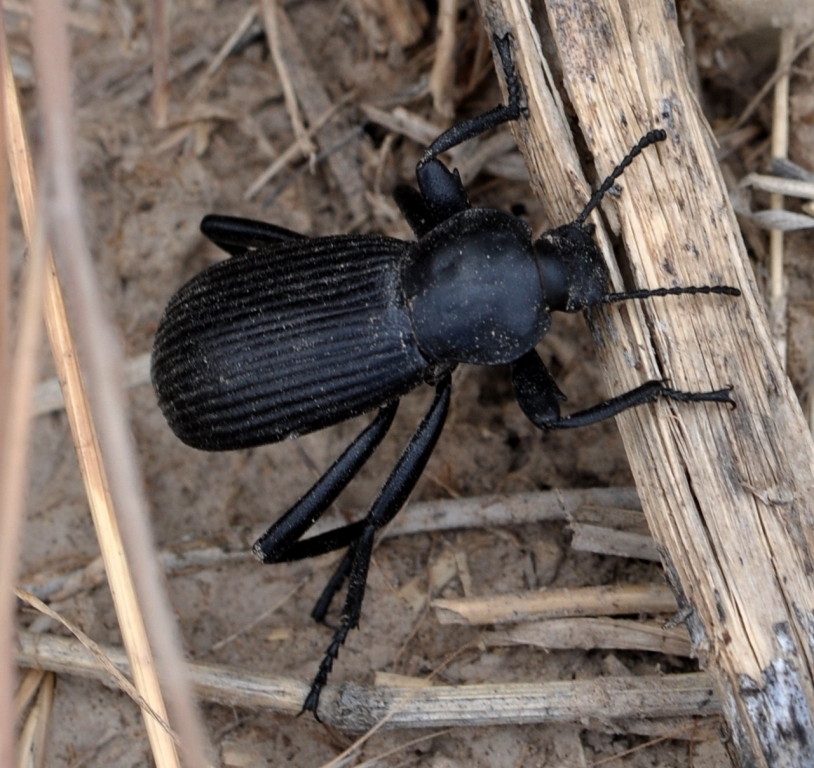
I had a chance to visit Idaho recently and happened to run into a couple of very interesting creatures that I have not seen since I left Afghanistan some time ago. The large black beetle is called a Darkling Beetle. Not sure where that name came from because this insect’s claim to fame has nothing to do with the dark, but it does have a lot to do with odor – a really bad odor. If you annoy or frighten one of these guys they assume that comical looking headstand and produce an acrid smelling substance from the back of their abdomen. And take my word on this – it’s bad; it’ll make you choke like tear gas, and I’ve had a sniff or two.
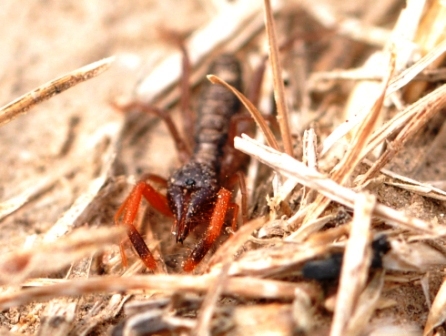
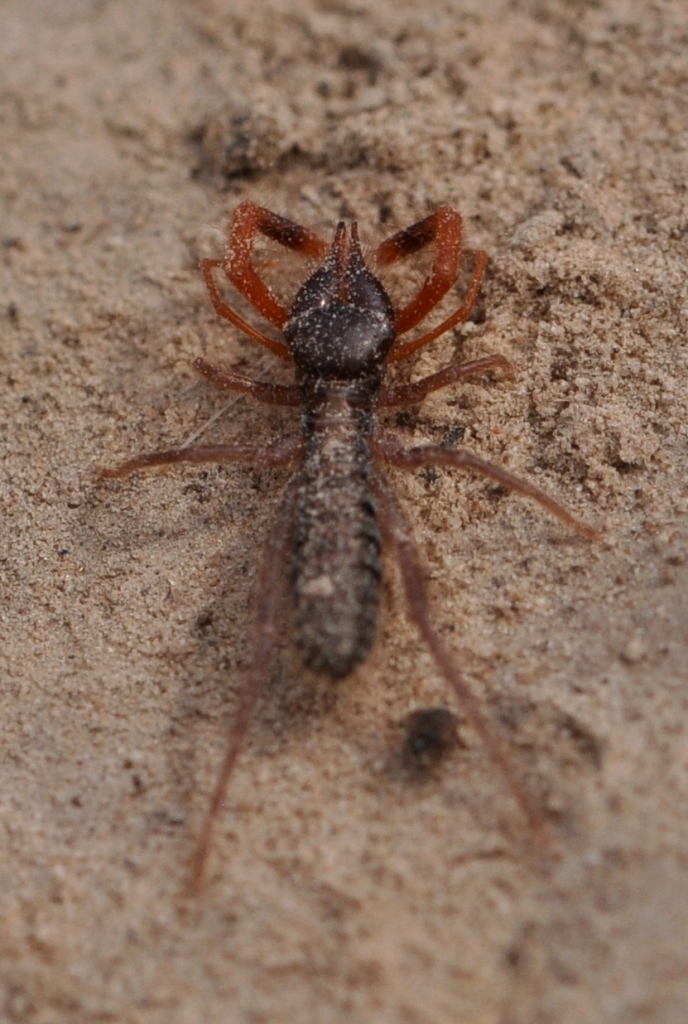
And then we have the notorious camel spider. Most people associate this animal with the Middle East or other locations but we have several species in the US adding to the thousand or so other species throughout the world. They are not poisonous but do have a painful bite. Not too much to worry about from this little fellow from the Potato State; he was less than a half inch long. For more in depth information and better photos go to the Camel Spider Homepage